Insulation Australasia
- Hits: 118
Building Confidence: Non-Conforming Building Materials, Risk, Accountability and the Future of Australia's Built Environment
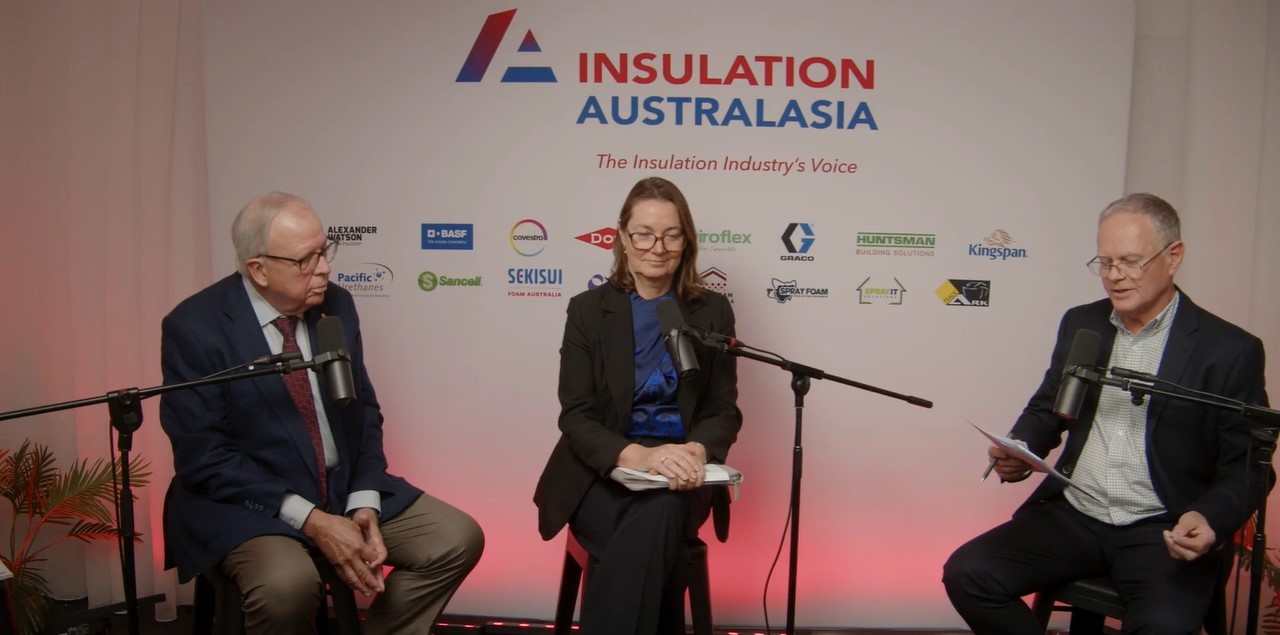
Insulation Australasia has released a new video podcast exploring one of the most important issues facing Australian construction: confidence in the products going into our buildings.
The discussion brings together two leading building reform voices, David Chandler OAM, former NSW Building Commissioner, and Bronwyn Weir, co-author of the national Building Confidence report. It is hosted by IA Technical Representative Keith Anderson.
The podcast examines non-conforming building products, product assurance and the role of stronger independent verification in improving building quality, procurement confidence, construction productivity and long-term asset performance.
Topics discussed
- The difference between product conformance and regulatory compliance
- The risks created by non-conforming building products
- Accountability across design, procurement, manufacturing, certification and construction
- The role of independent third-party verification in reducing risk
- Opportunities to strengthen transparency across the building supply chain
Please share the podcast with your industry, policy, procurement and professional networks.
- Hits: 311
Insulation Australasia (IA) continues to advocate for stronger verification of compliance evidence across the insulation supply chain in Australia and New Zealand.. Building on the concerns raised in our recent Position Statement, IA has now released a set of procurement documents designed to give specifiers, builders and procurement teams practical tools to verify that insulation products meet the standards and code requirements they are claimed to meet — from specification through to installation.
These resources respond to recurring documentation and traceability gaps that IA members continue to observe across parts of the building product supply chain. Where compliance claims cannot be verified against product-specific evidence — clear product identity and traceability, relevant standard and code claims, matching independent test evidence, current third-party certification, and installer competence where relevant — project parties are exposed to avoidable safety, performance and liability risk. These risks are heightened on publicly funded assets, where procurement governance and public accountability expectations are particularly high.
Product substitution after specification, without an equivalent evidence pack, is one of the most common points where this verification breaks down, and the new documents include specific guidance on requiring like-for-like evidence and accountable sign-off before any substitution is approved. But the guidance extends further, addressing a minimum evidence standard for procurement generally, audit rights and documentation obligations for suppliers, and clear escalation pathways for reporting suspected non-compliance or misleading claims.
The following documents are now available in IA's Technical Reports library:
- pdf Procurement Verification Checklist (107 KB)
- pdf Draft Procurement Clause Set (111 KB)
- pdf Annexure [X] Compliance Evidence Schedule (By Product Type) (113 KB)
IA encourages architects, specifiers, builders, certifiers and procurement professionals to make use of these resources and to incorporate them into standard project documentation and supplier agreements. Members with questions about applying this guidance to specific projects are encouraged to contact IA directly.
ld be read alongside the procurement documents above as a complete picture of IA's position and recommended actions. It follows our earlier IA Position Statement, which set out the industry's position on minimum evidence standards, substitution controls, audit rights and escalation pathways in detail, and should be read alongside the procurement documents above as a complete picture of IA's position and recommended actions.
- Hits: 988
Insulation Australasia (IA) and the Australian Modern Building Alliance (AMBA) have united to create a powerful national voice advocating safer, compliant and independently certified insulation.
The move brings together a broad and diverse coalition of more than 15 organisations across the insulation and building materials supply chain, strengthening Insulation Australasia’s collective voice to government, regulators, industry bodies, businesses, workers and consumers.
All current AMBA members signalled strong confidence in Insulation Australasia’s leadership, governance and long-term industry direction. Under the new structure, AMBA will operate as an Insulation Australasia committee, while Insulation Australasia remains an independent entity and will be admitted as an Affiliate Member of Chemistry Australia—creating a collaborative, three-way partnership that enhances national representation and strategic capacity.
At the heart of this unified platform is a shared commitment to tighter product compliance, higher safety standards, and stronger requirements for independent third-party verification of insulation products to ensure they perform as claimed in the Australian market.
A single, science-led voice for compliant, safe insulation
AMBA, previously operating as an interest group within Chemistry Australia, shares closely aligned values with Insulation Australasia, including evidence-based advocacy, product agnosticism, and a commitment to safe, high-quality building outcomes.
Together, Insulation Australasia and AMBA will provide:
- Regulators with a clear, credible industry contact point on insulation safety, performance and compliance.
- Builders, designers and installers with stronger guidance on standards, product selection and best-practice installation.
- Consumers with greater confidence that verified insulation products meet Australian standards and deliver the safety and energy-efficiency outcomes they promise.
A key focus for Insulation Australasia will be championing third-party independent verification of insulation products, encouraging government to legislate and enforce, so that compliance, safety and performance are clearly and transparently demonstrated.
Quotes attributable to Craig Lovel, Chair, Insulation Australasia
“This is an exciting and important step for the Australasian insulation industry. The unanimous support from AMBA members demonstrates strong confidence in Insulation Australasia’s future direction and our shared commitment to a professional, safe and innovative industry.”
“Insulation Australasia and AMBA share the same values—collaboration, science-first thinking, third-party certification, product agnosticism and advocacy for world-class standards. By uniting under one organisation, we strengthen our ability to speak clearly and credibly on issues that matter to industry, government and the community.”
“Australia needs insulation that performs as promised—and is independently verified. Together, we create a more powerful, single voice that is better positioned to influence regulatory reform, support compliant installation, and improve energy-efficiency and safety outcomes across the country.”
Quotes attributable to Duncan Hind, Executive Officer, Insulation Australasia
“The partnership with AMBA and the affiliation with Chemistry Australia marks the beginning of a new era for Insulation Australasia. This integrated structure enables deeper technical capability, stronger policy engagement and a more cohesive industry platform.”
“Our focus now is to leverage this collaboration to advance standards development, improve product compliance, champion installer training and accreditation, and ensure a united advocacy presence during the significant regulatory changes ahead, particularly State retrofit initiatives and the next stages of the National Construction Code.”
“By bringing industry voices together, we can more effectively support regulators, builders and installers, while helping consumers benefit from insulation that is safer, compliant, genuinely energy efficient, leading to a better quality of life.”
Strengthening representation during a period of major industry change
The unification comes at a critical time for the built environment, with major reforms underway in areas such as energy-efficiency requirements, product compliance, condensation mitigation and workforce capability. Insulation Australasia’s expanded expertise and membership will support:
- Focused leadership within the Affiliated Insulation Industry Coalition (AIIC).
- Enhanced representation on Australian Standards committees.
- Increased participation in national advisory groups such as ASBEC, and the ABCB work groups.
- Industry-wide collaboration on insulation roadmaps and retrofit programs.
- A unified advocacy approach during National Construction Code reforms.
Through the enhanced Board, Insulation Australasia will strengthen industry advocacy by highlighting risks associated with non-compliant products and promoting the expectation that all building materials—not just insulation—must comply with recognised standards to ensure safe, high-performing buildings.
About Insulation Australasia
Founded in 2011, Insulation Australasia is the peak product-agnostic industry association for the insulation sector across Oceania. Insulation Australasia represents manufacturers, material suppliers, the majority of certified installers, wholesalers and related organisations committed to improving Australia’s energy-efficiency, safety and building performance outcomes. Membership requires adherence to Insulation Australasia’s Code of Ethics, a science-based approach, and a strong commitment to third-party certification and product compliance.


Craig Lovel Duncan Hind
Chair Executive Officer
States recognise power of energy efficiency and social housing investment to drive economic recovery
- Hits: 2975
A coalition of Australia’s leading property and sustainability bodies have applauded the Victorian and NSW Governments’ significant investments in harnessing the power of energy efficiency and social housing to create jobs and drive the economic recovery from COVID-19.The Australian Sustainable Built Environment Council, Energy Efficiency Council, Green Building Council Australia and Property Council of Australia welcomed what were billion commitments to a more sustainable future.
- Hits: 1191
The 2025 edition of the National Construction Code (NCC)was formally published and released by the Australian Building Codes Board (ABCB) on 1 May 2026, marking Australia’s latest update to the national building and construction technical framework. Rather than a single national commencement date, adoption is proceeding on a staggered, jurisdiction-by-jurisdiction basis, meaning NCC 2022 and NCC 2025 are now operating concurrently across different states and territories. See NCC 2025 key changes for the ABCB's current summary.
Adoption Status by State and Territory (updated August 2026)
As at August 2026, adoption of NCC 2025 varies significantly by jurisdiction:
- Victoria and the Northern Territory adopted NCC 2025 as mandatory from 1 May 2026, as originally scheduled.
- New South Wales and Queensland delayed mandatory adoption to 1 May 2027, citing rising construction costs, industry insolvencies and pressure on housing targets — though early/voluntary adoption has been available from 1 May 2026.
- The ACT has set a 1 May 2027 mandatory date in some jurisdictional guidance, with early adoption available from 1 May 2026.
- South Australia, Western Australia and Tasmania have not yet confirmed mandatory adoption dates; NCC 2025 is available for early adoption in these jurisdictions from 1 May 2026
Because dates are still shifting, members should confirm which NCC edition applies to a given project and check the ABCB's state and territory adoption tracker before relying on this summary.
Key updates in NCC 2025
NCC 2025 introduces a suite of technical updates across priority areas including:
• Water management – strengthened provisions for commercial and apartment buildings to reduce water ingress risk
• Carpark fire safety – enhanced requirements to address fire risks in shared and commercial carparking structures
• Commercial energy efficiency – new requirements such as improved lighting control requirements and mandatory on-site solar photovoltaic systems are introduced that reduce energy consumption
• Condensation mitigation – changes to condensation management provisions, such as reduced ventilation requirements for small roofs, are now introduced
• Structural reliability and fire safety Performance Solutions – clarified assessment requirements to support more consistent and robust Performance Solutions across structural and fire safety design
These provisions were finalised following advice from the ABCB and endorsed by Building Ministers in late 2025.
Ministers endorse NCC 2025 timeline and commit to modernisation
At the October 2025 Building Ministers’ Meeting (communiqué), Ministers confirmed the publication schedule for NCC 2025 and agreed to a pause on new residential NCC changes until mid-2029, except where essential safety or quality issues arise. This is intended to give industry greater regulatory stability during the adoption period.
Ministers also committed to a multi-year program to modernise and simplify the NCC, including efforts to:
• Improve usability, including through digital and AI-assisted tools
• Reduce unnecessary regulatory burden
• Support greater national consistency while maintaining jurisdictional flexibility
Context for Insulation Australasia
The NCC 2025 preview confirms a clear shift in regulatory emphasis away from incremental increases in minimum insulation values and toward how insulation performs as part of an integrated building system. For members of Insulation Australasia, the significance of NCC 2025 lies less in headline changes to R‑values and more in the way insulation has become central to broader compliance outcomes across energy efficiency, condensation management, fire performance and building durability.
Energy Efficiency in Commercial Buildings and Apartments
In energy efficiency provisions applying primarily to commercial buildings and common areas of apartment buildings, NCC 2025 increases the importance of insulation by tightening expectations around whole‑of‑envelope performance. While explicit minimum insulation requirements are not radically lifted, compliance increasingly depends on achieving defined Total System U‑values and maintaining continuity of the thermal envelope. This places greater scrutiny on insulation design, placement and detailing, particularly at junctions, penetrations and interfaces with façades, roofs and services. As a result, insulation is no longer treated as an isolated product but as a critical contributor to whole‑building energy performance.
Condensation management
Condensation management is one of the most consequential areas for insulation installers and manufacturers. NCC 2025 refines provisions to place less reliance on ventilation alone and more emphasis on correct control of moisture movement through building assemblies. Insulation is now directly linked to condensation risk outcomes, particularly where vapour‑permeable membranes, sarking and drained or ventilated cavities are required. Incorrect placement, compression or incompatibility of insulation materials can create moisture traps that undermine compliance, even where nominal thermal performance appears adequate. This elevates insulation from a thermal solution to a risk‑critical element in building health, durability and indoor air quality.
Fire Performance and Performance Solutions
Fire performance requirements and the treatment of Performance Solutions under NCC 2025 further increase accountability for insulation products. The Code relies more heavily on referenced Australian Standards and documented assessment pathways, reducing the scope for informal interpretation or expert judgement where quantitative evidence is expected. For insulation products used in fire‑affected or service‑adjacent applications, manufacturers and suppliers are increasingly expected to provide clear test data, defined conditions of use and robust documentation to support both Deemed‑to‑Satisfy and Performance Solution pathways.
Residential Buildings: Stability Maintained
For residential buildings, NCC 2025 deliberately maintains stability by retaining the energy efficiency framework introduced through NCC 2022 Amendment 2. This provides certainty for insulation businesses operating in the housing market, with no immediate increase in regulatory stringency. However, regulatory focus is expected to shift toward quality of installation, documentation and as‑built performance, meaning that compliance expectations in practice may still rise even without changes to minimum values.
Alignment with Australian Standards
Across all these areas, Standards Australia has emphasised that NCC 2025 is increasingly underpinned by updated and revised Australian Standards. This reinforces the need for insulation products and installation practices to align not only with the wording of the NCC but also with the technical intent of referenced standards covering thermal, moisture and fire performance. Insulation Australasia members therefore sit at a critical junction between regulation, standards development and on‑site practice.
Taken together, the NCC 2025 preview signals a clear direction of travel: insulation performance is now synonymous with building performance. Compliance outcomes depend as much on how insulation is specified, integrated and installed as on its nominal thermal rating. For IA members, this creates both responsibility and opportunity—those able to demonstrate system compatibility, installation quality and evidence‑based performance will be increasingly well positioned as designers, builders, certifiers and regulators adapt to the intent of the 2025 Code.
Suggested Reference Links
NCC 2025 state and territory adoption information (ABCB)
Building Ministers' Meeting communiqué, October 2025 (Treasury.gov.au)

- Hits: 4005
Media release: Improving the health and efficiency of buildings with insulation
22 March 2023
Improving the thermal performance of buildings – particularly through upgrades such as insulation will play a key role in improving Australia’s energy performance: reducing emissions; reducing energy supply infrastructure stresses and costs; and saving money for businesses and consumers.
Insulation plays a fundamental role in reducing the energy consumption and peak energy demand of homes and commercial premises while also enhancing demand flexibility, and will be essential to accelerating the transition to net zero, futureproofing and enhancing the climate safety of Australian homes.
Read more: Improving the health and efficiency of buildings with insulation

- Hits: 4913
Victoria Government Gazette
No. S 22 Wednesday 13 January 2021
Building Act 1993 REVOCATION OF MINISTER’S GUIDELINE MG-14: ISSUE OF BUILDING PERMITS WHERE BUILDING WORK INVOLVES THE USE OF CERTAIN CLADDING PRODUCTSI, Richard Wynne, Minister for Planning and Minister responsible for the Building Act 1993 (the Building Act), revoke Minister’s Guideline 14: Issue of Building Permits Where Building Work Involves the Use of Certain Cladding Products, which was published in the special edition of the Victorian Government Gazette, No. S 110 Tuesday 13 March 201
By Authority of Victorian Government Printer
- Hits: 549